
Startup Funding

Top Startup Funding Grants for Toronto Startups
Startup Funding Toronto

Top Startup Funding Grants for Toronto Startups

Startup Funding Toronto

Every startup needs funding to get off the ground. Whether it’s a few hundred dollars for a domain name and website hosting, purchasing software tools, building a prototype, or covering early operating expenses, launching a business often requires upfront investment long before revenue begins to flow.

While many founders turn to personal savings, friends and family, or investors, one of the most attractive sources of startup funding is non-dilutive capital. Unlike venture capital or angel investment, non-dilutive funding allows founders to access financial support without giving up ownership or equity in their company.

Fortunately, Toronto entrepreneurs have access to a growing number of grants, fellowships, and funding programs designed to help startups launch, validate ideas, develop products, and scale their businesses. Here are some of the top startup funding opportunities available to founders in Toronto and across Ontario.

1. Starter Company Plus

Starter Company Plus is a small business grant program that helps entrepreneurs start, grow, or purchase an existing business. Delivered through local Small Business Enterprise Centres across Ontario, the program combines training, mentorship, and financial support.

Successful applicants can receive grant funding to help cover business expenses while also gaining access to workshops, business planning resources, and ongoing guidance from experienced advisors. The program is particularly well suited for early-stage founders and first-time entrepreneurs looking to validate and launch their businesses.

2. Inventor to Founder Fellowship

The Inventor to Founder Fellowship supports researchers, innovators, and technical founders who are looking to commercialize breakthrough technologies and transform innovative ideas into venture-backed companies.

Participants receive funding, mentorship, and access to experienced entrepreneurs who help bridge the gap between invention and business creation. The fellowship is ideal for founders emerging from universities, research institutions, or deep-tech sectors who need support turning intellectual property into a scalable startup.

3. Entrepreneurship & Innovation Fund

The Entrepreneurship & Innovation Fund provides financial support to organizations and initiatives that strengthen Ontario’s innovation ecosystem. Through various streams and partnerships, the fund helps accelerate entrepreneurship, support startup growth, and encourage innovation across multiple industries.

Startups may benefit indirectly through programs, incubators, accelerators, and ecosystem partners that receive support through the fund. It plays an important role in expanding resources available to entrepreneurs across the province.

4. i.d.e.a. Fund

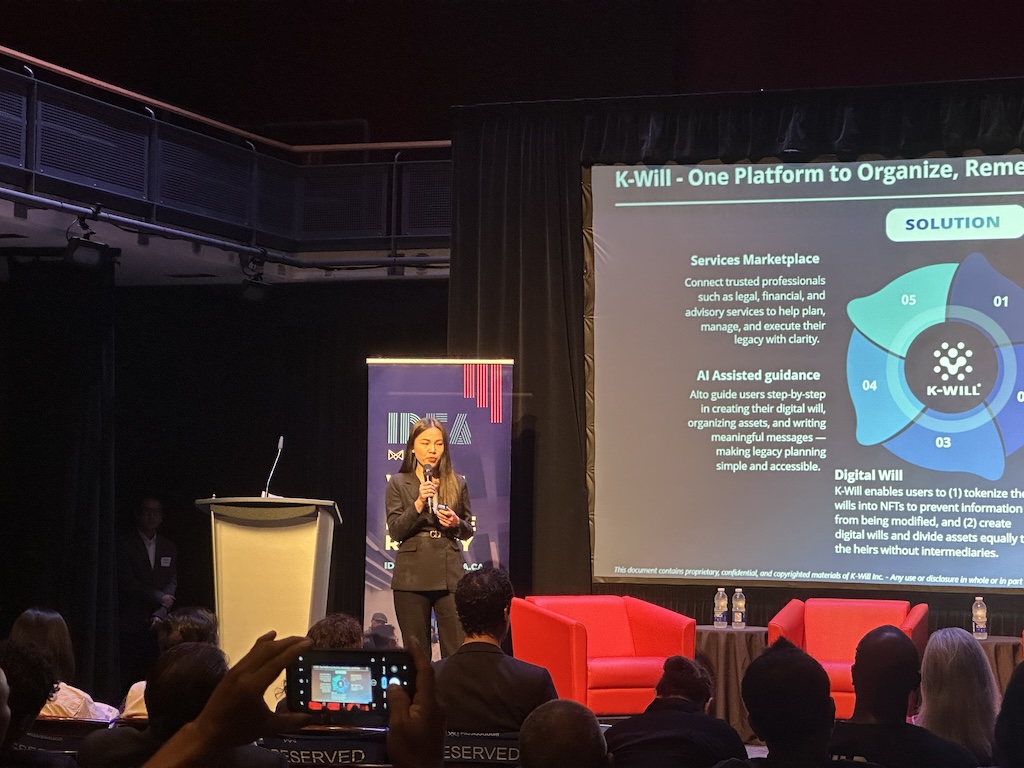
The i.d.e.a. Fund was created to support high-potential startups led by founders from equity-deserving communities. The program helps entrepreneurs access capital, mentorship, training, and strategic support needed to grow innovative businesses.

In addition to funding, founders gain access to a network of advisors, industry experts, and ecosystem partners. The program focuses on creating more inclusive opportunities within Canada’s startup ecosystem while helping businesses reach commercialization and growth milestones.

5. Life Sciences Innovation Fund (LSIF)

The Life Sciences Innovation Fund (LSIF) supports Ontario-based life sciences companies that are developing innovative health technologies, biotechnology solutions, medical devices, diagnostics, and other healthcare innovations.

The fund is designed to help companies advance product development, achieve commercialization milestones, and accelerate growth. By providing non-dilutive funding, LSIF helps promising life sciences startups move closer to market while strengthening Ontario’s position as a leading health innovation hub.

6. Circular Food Innovators Fund

The Circular Food Innovators Fund supports startups and organizations developing solutions that reduce food waste, improve sustainability, and create circular economy opportunities within the food sector.

Funding is available for innovative projects that help divert waste, improve resource efficiency, develop sustainable food systems, and create environmental impact. The program is particularly attractive to food-tech startups, sustainability-focused ventures, and companies building technologies that support a more circular food economy.

Access to funding can make a significant difference during the early stages of building a startup. While customer revenue should always be the ultimate goal, grants and fellowship programs can provide valuable non-dilutive capital that helps founders test ideas, build products, hire talent, and reach important milestones without giving up ownership in their company.

For Toronto founders, these programs represent some of the most promising funding opportunities available today and are worth exploring as part of any startup funding strategy.

1024 768 FundingCake
12 Startups Selected for the 2026 Thiel Fellowship
Thiel Fellowship Winners

12 Startups Selected for the 2026 Thiel Fellowship

Thiel Fellowship Winners

The newest class of fellows from the Thiel Fellowship is tackling some of the most ambitious problems in technology, from autonomous logistics and robotics to financial infrastructure, AI research, biotech simulations, and next-generation commerce platforms.

This year’s cohort reflects where global innovation is heading. Artificial intelligence remains a dominant theme, but the 2026 fellows are also building in industries like defense tech, fintech, robotics, logistics, infrastructure, fraud detection, and biotech. The selected founders span the globe, representing cities across North America, South America, Europe, Africa, and Asia.

Here’s a closer look at the 2026 Thiel Fellows and the companies they’re building.

1. Cavalla, Victor Boyd

Cavalla, founded by Victor Boyd, is focused on radically accelerating the movement of goods.

The startup’s long-term vision is ambitious: getting anything anywhere in under five hours. Cavalla is beginning with autonomous forklifts while working toward larger infrastructure systems, including what Boyd describes as “hypersonic highways.” The company sits at the intersection of robotics, logistics, and advanced transportation infrastructure.

2. Praso, Samuel Carvalho

Praso, founded by Samuel Carvalho, is modernizing wholesale commerce for underserved regions in Brazil.

Praso is building infrastructure that combines procurement, credit, and workflow tools for SMBs. The company aims to streamline operations for merchants and businesses that have historically lacked access to modern commerce systems and financial infrastructure.

3. EveryTicker, Nick Dobroshinsky

EveryTicker, founded by Nick Dobroshinsky, is designed to make institutional-grade financial research accessible to a broader audience.

The company focuses on covering the thousands of smaller public companies often overlooked by Wall Street analysts, giving retail investors and market participants deeper access to market intelligence across the U.S. stock market.

4. Juicebox, Ishan Gupta

Juicebox, founded by Ishan Gupta, is building AI-powered recruiting technology focused on improving hiring decisions.

The startup is creating AI agents that evaluate real-world skills and competencies, aiming to reduce bias and inefficiencies in the hiring process. Juicebox is part of a growing wave of startups attempting to reshape talent acquisition using AI-driven assessments.

5. Derpetual, Antoni Kiszka

Derpetual, founded by Antoni Kiszka, is building infrastructure for leveraged markets across a wide range of assets.

The startup’s broader mission is to enable markets for virtually any asset category, expanding how financial instruments can be traded and accessed.

6. Opt32, Milan Lustig

Opt32, founded by Milan Lustig, is building compute systems designed to bring AI directly into physical machines.

Opt32 is focused on enabling onboard AI for robots, drones, and vehicles, an increasingly important segment as edge computing and autonomous systems continue to advance.

7. Standard Intelligence, Galen Mead

Standard Intelligence, founded by Galen Mead, is working on aligned general learning systems.

The company is training large-scale models that actively explore and learn from the internet, reflecting the growing race toward more autonomous and adaptive AI systems.

8. Swoop, Aubrey Niederhoffer

Swoop, founded by Aubrey Niederhoffer, is beginning with food delivery services in Nigeria.

The startup plans to expand into financial services across Africa, positioning itself as a broader consumer technology platform that combines logistics, payments, and commerce into a single ecosystem.

9. Sentient Machines, Harry O’Connor

Sentient Machines, founded by Harry O’Connor, is building foundational AI models for robotics.

The company’s goal is to create systems that generalize across environments and tasks, addressing one of the largest technical challenges in robotics today.

10. The Antifraud Company, Alex Shieh

The Antifraud Company, founded by Alex Shieh, combines AI with investigative journalism techniques.

The company positions itself as a “fraud bounty hunter,” focused on identifying fraud and protecting taxpayer dollars through advanced investigative systems.

11. Claire Wang

Claire Wang is working on biologically accurate simulations of nervous systems, beginning with C. elegans.

Her work aims to build simulated brains that researchers can communicate with directly, laying foundational groundwork for future brain-computer interface technologies and neuroscience research.

12. Action, Kyler Wang

Action, founded by Kyler Wang, is an artificial intelligence startup currently operating in stealth mode.

While details remain limited, the company joins a broader wave of AI startups emerging from the fellowship program.

A New Generation of Builders

The 2026 Thiel Fellowship cohort highlights a broader shift happening across the startup ecosystem. Founders are increasingly targeting large-scale infrastructure problems, from AI alignment and robotics to financial systems, logistics, biotech simulations, and global commerce.

Rather than focusing solely on consumer apps, many of this year’s fellows are building foundational technologies with the potential to reshape industries at scale. The global nature of the cohort also underscores how innovation is no longer concentrated in a single region, with founders emerging from Brazil, India, Poland, Ireland, Nigeria-focused ventures, and beyond.

As AI, robotics, and infrastructure continue to dominate venture capital interest, this year’s fellows offer an early glimpse into the technologies and industries many investors believe could define the next decade.

1024 684 FundingCake
Meet the 20 Startups Advancing in Founder Ball’s $500K Pitch Competition
Startup Competition Canada Founder Ball

Meet the 20 Startups Advancing in Founder Ball’s $500K Pitch Competition

Startup Competition Canada Founder Ball

Canada’s startup ecosystem is gearing up for one of its most high-profile founder events of the year as Founder Ball unveiled the Top 20 semi-finalists competing in its massive $500,000 pitch competition. Blending the energy of a startup summit with the atmosphere of an exclusive yacht celebration, Founder Ball is positioning itself as more than just a competition, it’s a showcase of Canadian innovation and ambition.

Founder Ball combines a pitch competition with its annual En Blanc Yacht Party, bringing together 250 of Canada’s most influential founders, investors, operators, and business leaders. Every ticket holder joins Founder Ball Fund I, contributing toward backing what organizers hope could become Canada’s next unicorn startup.

The event promises one winner, a life-changing investment, and a national spotlight for emerging companies building across AI, healthtech, consumer brands, SaaS, and deep technology.

The final eight companies advancing to the championship round will be announced on May 26.

Meet the Top 20 Semi-Finalists

1. Blossom Social

Blossom Social is a social investing platform designed to help people share investment ideas, track portfolios, and learn from other investors through a community-driven experience.

2. Pontosense

Pontosense develops contactless sensing technology that uses wireless signals to monitor human movement and health metrics without requiring wearables or cameras.

3. Marlow

Marlow is a startup focused on modernizing financial experiences for consumers and businesses through simplified and accessible fintech solutions.

4. SELLIT9

SELLIT9 is helping businesses streamline digital commerce and sales operations with technology aimed at improving online growth and customer acquisition.

5. Apricotton

Apricotton is a consumer brand creating bras specifically designed for growing teens, focusing on comfort, education, and body confidence.

6. D2Type

D2Type is building solutions focused on design, typography, and digital creative tools aimed at empowering creators and brands.

7. VEGAIN Nutrition

VEGAIN Nutrition develops plant-based nutrition products designed for athletes and health-conscious consumers looking for sustainable performance supplements.

8. TechEasy

TechEasy helps businesses simplify technology adoption and IT operations through accessible tech support and digital transformation services.

9. Vigilant AI

Vigilant AI is leveraging artificial intelligence to help organizations improve monitoring, security, and operational decision-making.

10. Skinopathy

Skinopathy is a skincare-focused company developing science-backed products and solutions aimed at improving skin health and wellness.

11. ConeLabs Inc.

ConeLabs develops technology and innovation-driven solutions designed to improve operational efficiency and scalable business growth.

12. NTangible

NTangible is focused on emerging technologies and digital ownership experiences that bridge physical and virtual assets.

13. July Health

July Health is a healthtech startup building solutions aimed at improving patient care, healthcare accessibility, and wellness outcomes.

14. VCyene

VCyene develops advanced technology solutions focused on data, infrastructure, and next-generation computing systems.

15. Cove Neurosciences

Cove Neurosciences is a neuroscience-focused company working on innovative approaches to brain health and neurological care.

16. Pieriq

Pieriq is building technology designed to improve logistics, operational systems, and workflow efficiency for modern businesses.

17. Cocoon

Cocoon is creating products and services focused on community, wellness, and improving modern lifestyle experiences.

18. FriedmannAI

FriedmannAI is developing artificial intelligence tools designed to help businesses automate workflows and enhance decision-making.

19. Quotograph

Quotograph is focused on transforming how businesses manage quotes, proposals, and sales documentation through digital tools.

20. BAO LIFE BRAND INC.

BAO LIFE BRAND INC. is a consumer-focused lifestyle company building products and experiences centered around modern culture and community.

Founder Ball says the Final 8 startups moving forward in the competition will be revealed on May 26. The finalists will then compete for the $500,000 investment prize and the title of Founder Ball Champion.

The competition highlights the growing momentum surrounding Canada’s startup ecosystem, bringing together founders across industries ranging from AI and healthcare to consumer products and fintech. With capital, community, and celebration all combined into one event, Founder Ball is quickly becoming one of the country’s most anticipated startup gatherings.

1024 683 FundingCake
12 Startup Grants and Funding Programs With Rolling Applications
Startup Funding Grants with Rolling Applications

12 Startup Grants and Funding Programs With Rolling Applications

Startup Funding Grants with Rolling Applications

Did you ever come across a funding opportunity and realize you missed the deadline? Bummer! It happens more often than you’d think. Founders are busy, and things slip through the cracks.

Finding startup funding often comes down to timing. Many programs only open once a year, which can cause founders to miss out simply because they are not ready at the right moment. These funding programs stay open year-round, allowing entrepreneurs to apply whenever they are ready.

Below is a curated list of grants and funding opportunities with rolling applications.

1. Hustler’s Microgrant

A microgrant program supporting early-stage entrepreneurs and small business owners who need small amounts of capital to launch or grow.

Funding Amount: $1,000
Who It’s For: Small business owners
Deadline: Rolling applications
Apply here

2. Idea Cafe Small Business Grant

A grant program aimed at helping entrepreneurs bring their business ideas to life, with a focus on accessibility for early-stage founders.

Funding Amount: $1,000
Who It’s For: Women founders
Deadline: Rolling applications
Apply here

3. Her Culture Micro Grant

Supports African and Caribbean women entrepreneurs with microgrants designed to help launch or grow small businesses and community-driven projects.

Funding Amount: $500
Who It’s For: African and Caribbean women
Deadline: Rolling applications
Apply here

4. WomensNet Amber Grant

One of the most well-known women-focused grants, offering monthly funding opportunities to women entrepreneurs across industries.

Funding Amount: $25,000
Who It’s For: Women founders
Deadline: Rolling applications
Apply here 

5. Wish Local Empowerment Program

A support program designed to help Black-owned brick-and-mortar businesses with funding to support growth and operational needs.

Funding Amount: $500 to $2,000
Who It’s For: Black-owned brick-and-mortar businesses
Deadline: Rolling applications
Apply here

6. Boston Celtics United, VistaPrint & NAACP Power Forward Grant

A grant initiative supporting Black-owned businesses in New England with funding to help strengthen and scale operations.

Funding Amount: $25,000
Who It’s For: Black-owned businesses in New England
Deadline: Rolling applications
Apply here

7. The Philadelphia Small Business Catalyst Fund

A local funding initiative supporting small businesses in Philadelphia focused on growth, stability, and community impact.

Funding Amount: Up to $50,000
Who It’s For: Small businesses in Philadelphia
Deadline: Rolling applications
Apply here

8. The McKinney Innovation Fund

A Texas-based fund investing in startups and early-stage companies with strong innovation potential and growth plans.

Funding Amount: $50,000 to $500,000
Who It’s For: Texas-based founders
Deadline: Rolling applications
Apply here

9. Power Forward Small Business Grant

A regional grant program supporting small businesses in New England with funding to support expansion and recovery efforts.

Funding Amount: $25,000
Who It’s For: Small businesses in New England
Deadline: Rolling applications
Apply here

10. iFundWomen Universal Grant

A funding platform that connects women entrepreneurs to grants, crowdfunding opportunities, and business resources.

Funding Amount: Varies
Who It’s For: Women founders
Deadline: Rolling applications
Apply here

11. YippityDoo Big Idea Grant

A microgrant program supporting women entrepreneurs with funding to help launch new ideas or scale early-stage businesses.

Funding Amount: $1,000
Who It’s For: Women founders
Deadline: Rolling applications
Apply here

12. Z Fellows

Z Fellows is a startup fellowship that supports ambitious technical builders working on startups, side projects, research, or new ideas. Selected fellows receive a $10,000 stipend and join an in-person founder experience with mentorship, networking, and access to investors and experienced operators.

Funding Amount: $10,000
Who It’s For: Early-stage founders and technical builders
Deadline: Rolling applications
Apply here

For founders, timing is often the biggest barrier to funding, not eligibility. Rolling grant programs remove that friction by allowing entrepreneurs to apply when they are actually ready, rather than waiting for fixed application windows.

While most of these grants are relatively small compared to venture capital, they can be extremely valuable for validating ideas, covering early operational costs, and gaining initial traction. For many startups, especially in the early stages, this type of funding can be the difference between staying stuck and moving forward.

1920 1277 FundingCake
Top 10 Scrappy Startup Funding Stories
Startup Funding Stories

Top 10 Scrappy Startup Funding Stories

Startup Funding Stories

How do you go about funding your startup? Every startup needs some form of funding, even when bootstrapping. Something to cover the basic costs of operating a business, including servers, incorporation, tools, and everything in between.

We often see companies like Airbnb and assume they started with funding or smooth early traction, but the reality is many of them were incredibly scrappy in the early days.

A lot of startups, especially SaaS companies, begin as agencies. They use client work to fund internal experiments, and sometimes those side projects evolve into full companies.

Here are some of the most fascinating examples of startup funding done the scrappy way.

5. Spanx: Starting with savings

Spanx has one of the most fascinating founder stories. Sara Blakely had no industry connections, no venture backing, and no external funding.

In 1998, she was a 27-year-old door-to-door fax machine salesperson. She started her company with just $5,000 in personal savings. No team, no investors, and no manufacturing background.

She wrote her own patent application to save money and cold-called manufacturers until someone agreed to work with her. That early scrappiness became the foundation of a billion-dollar brand.

4. Basecamp: From agency work to product business

Basecamp started as a web design and development agency called 37signals. The founders were doing client work to pay the bills, but they kept running into the same internal problem: project management tools were messy, overcomplicated, and not built for how they actually worked.

Instead of raising funding or hiring a large team, they built a simple internal tool to manage client projects more effectively. That tool eventually became Basecamp.

The key shift was intentional. They did not immediately spin it out as a venture-backed startup. They used agency revenue to fund development while keeping the product extremely focused and profitable from early on.

Over time, Basecamp evolved into a fully independent product company built around a philosophy of simplicity, profitability, and sustainability. Even today, it stands as one of the clearest examples of a software company that chose discipline over rapid scaling.

3. GoPro: Selling belts to fund cameras

GoPro founder Nick Woodman started with a very different problem. He wanted a better way to capture surfing footage, but needed capital to build early prototypes.

To fund the idea, he sold inexpensive shell bead belts out of a van while traveling between surf spots. He also used personal savings and support from family to keep development going.

The scrappy part was not just fundraising, but building and testing the product in real environments while still figuring out how to pay for it.

2. Mailchimp: The side project that became the main business

Mailchimp did not begin as a standalone startup. It was originally built as an internal tool inside a web design agency to help clients send email campaigns.

Instead of raising money or spinning it out immediately, the founders continued running it as a side project. Revenue from agency work helped fund operations while the product slowly gained traction on its own.

Eventually, the side project outgrew the agency entirely and became the core business, scaling into one of the most well-known email marketing platforms without venture capital.

1. Airbnb: When cereal boxes kept the dream alive

This is by far the most iconic example. Selling cereal boxes to fund a startup sounds absurd, but it worked. Before becoming a global hospitality platform, Airbnb’s founders were struggling to raise money and keep the company afloat. One of their most famous moves was selling themed cereal boxes during a U.S. election cycle.

They created limited edition boxes inspired by presidential candidates and sold them as novelty items. It was not a scalable business model, but it worked as a lifeline. The project generated enough revenue to support early development and kept the company alive at a critical moment when investors were not convinced. What stands out is not the cereal itself, but the mindset behind it, treating anything as a funding opportunity when runway is running out.

Your job as a founder is to extend your runway. That often means finding creative ways to fund the startup while the core idea is still taking shape. The funding is rarely the main story. The main story is survival long enough to get to product-market fit.

Keep the main thing the main thing, and use whatever tools you have to stay in the game until it works.

1024 683 FundingCake
Startup Capital Stack: Keeping More Pie in Your Company
Startup Funding Stack

Startup Capital Stack: Keeping More Pie in Your Company

Startup Funding Stack

As Paul Graham, the co-founder of the world’s top startup accelerator, says, avoid venture debt. For years, startup fundraising felt like a binary decision: raise venture capital or pursue non-dilutive funding like grants. But today, that model is outdated. The most successful founders are no longer choosing between the two, they’re combining them. Welcome to the rise of blended capital stacks.

This modern fundraising strategy combines equity and non-dilutive funding into a structured approach designed to maximize valuation and minimize dilution. Instead of relying on a single capital source, startups are stacking funding types in a strategic sequence: grants → revenue-based financing (RBF) → venture debt (avoid it)→ equity. And in 2026, this hybrid model is quickly becoming best practice.

What Is a Blended Capital Stack?

A blended capital stack is a fundraising strategy where startups layer multiple types of capital both dilutive and non-dilutive over time. Rather than raising venture capital upfront, founders use alternative funding sources to build traction first. This approach allows startups to:

– Extend runway without giving up equity
– Improve key metrics before raising
– Increase leverage in investor negotiations
– Raise at higher valuations

In short, it’s about being strategic when it comes to capital, not reactive.

Why Non-Dilutive Funding Is Leading the Shift

The growing popularity of non-dilutive funding for startups is driving this trend. Founders are realizing they don’t need to give up ownership early just to get started. Here’s how each layer in a blended capital stack works:

1. Grants (Zero Dilution Capital)

Startup grants are often the first layer. They provide funding for innovation, R&D, and early-stage development without requiring repayment or equity. For startups in sectors like AI, climate tech, and biotech, grants can fund critical early milestones that are completely dilution-free.

For grants opportunities check out startup grants in Canada, accelerators programs, and startup competitions.

2. Revenue-Based Financing (RBF)

Once a startup has revenue, revenue-based financing becomes a powerful tool. Instead of giving up equity, founders repay investors as a percentage of monthly revenue. This makes RBF ideal for SaaS and recurring revenue businesses looking to scale without dilution.

3. Venture Debt (avoid it)

Venture debt is often used to extend runway between equity rounds. It allows startups to access capital without immediately diluting ownership. Some startup leaders have strong views on venture debt as many say to avoid it all together. Venture debt seems to kill startups than to actually save it.

4. Equity (Raised Later, Smarter)

Only after building traction through non-dilutive funding do many startups choose to raise venture capital. By this stage, they typically have stronger revenue metrics, a proven product-market fit, and better growth data.

This ultimately translates into higher valuations and less dilution in each funding round.

Maximize Valuation, Minimize Dilution

At its core, a blended capital stack is about optimization. Traditional fundraising often forces founders to give up significant equity early, when their valuation is at its lowest. By contrast, this hybrid approach allows founders to delay equity fundraising until the company is in a stronger position.

This results in founders retaining more ownership, gaining better negotiating power with investors, and increasing their long-term upside. In today’s tighter capital markets, this strategy isn’t just smart, it is necessary.

Why blended capital is now best practice comes down to several macro trends that are accelerating the shift toward hybrid funding strategies. Venture capital has become more selective, valuations are under pressure, founders are prioritizing capital efficiency, and more non-dilutive funding options are available than ever before.

As a result, startups that rely solely on equity are at a disadvantage. Blended capital stacks offer greater flexibility, improved resilience, and more control, all of which are critical for founders navigating uncertain markets.

Challenges to consider are important, as this approach, while powerful, is not without complexity. Managing a blended capital stack requires strong financial planning, a clear understanding of different funding instruments, and operational discipline, especially when working with grants and debt.

Each type of funding comes with its own trade-offs. Grants require ongoing reporting, revenue-based financing depends on steady and predictable revenue, and venture debt introduces repayment obligations.

However, for founders who manage it effectively, the upside far outweighs the added complexity.

How to Build a Blended Capital Strategy

If you’re a founder, start thinking about your funding strategy early. Here are three key principles:

1. Think in sequences, not events. Each funding source should unlock the next stage of growth.
2. Start with non-dilutive capital. Use grants and alternative financing to build traction before raising equity.
3. Be intentional with dilution. Only raise venture capital when it gives you a clear strategic advantage.

The future of startup fundraising isn’t about choosing between venture capital and non-dilutive funding.
It’s about combining them. Blended capital stacks represent a smarter, more strategic approach to raising money—one that prioritizes efficiency, control, and long-term value. In a world where capital is no longer easy, founders who master this approach won’t just survive. They’ll outperform.

1600 1067 FundingCake